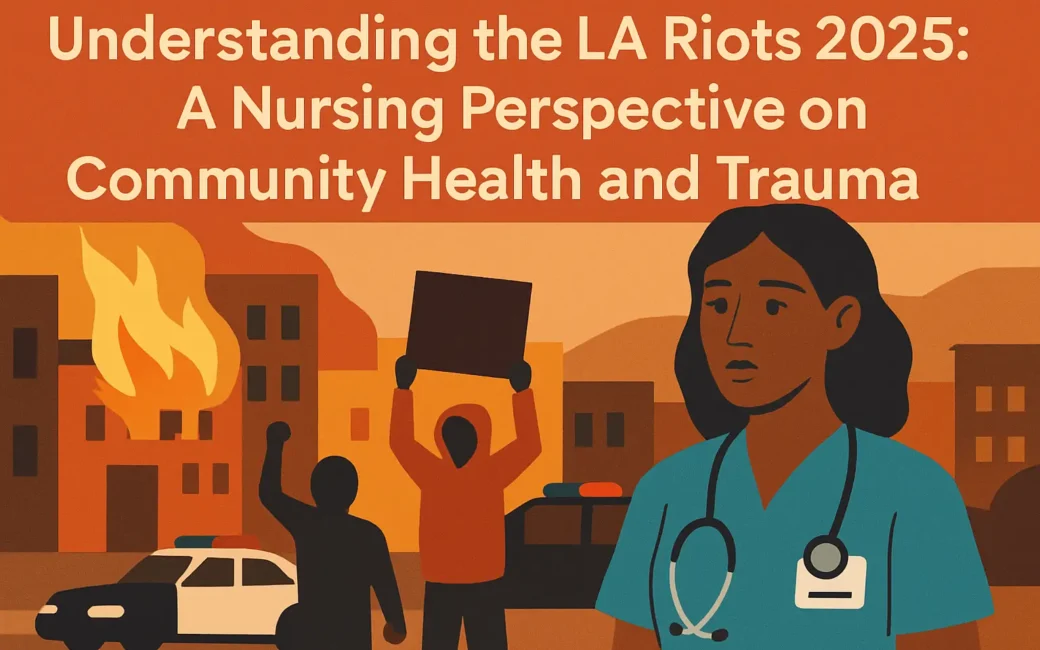
Understanding the LA Riots 2025: A Nursing Perspective on Community Health and Trauma
Hey there! So, let’s talk about something that’s been on my mind lately: the LA Riots of 2025. If you’re in nursing or any healthcare field, I bet you’re already aware that societal events like this have huge ramifications on community health. I mean, it’s not just about the physical injuries but also the unseen scars that linger long after the chaos has settled. Honestly, I wish someone had told me this sooner when I was knee-deep in nursing school! Grab your coffee—let’s dive into this together.
The Context: What Happened During the LA Riots?
Okay, so before we get into the nitty-gritty of community health, we should get a grasp of what actually went down. The LA Riots of 2025 were sparked by a police incident that, honestly, was a lighted fuse waiting to explode. Tensions had been building for years, and this was the straw that broke the camel’s back. Here’s a quick rundown:
- Trigger Event: A controversial police encounter involving a local resident ignited protests across the city.
- Escalation: What started as peaceful demonstrations quickly turned into riots, with looting, violence, and property damage.
- Aftermath: Communities were left fractured, with deep mistrust between residents and law enforcement.
You might be wondering, “Why should I care?” Well, let’s be real: you’ll encounter patients who have been affected by this kind of trauma every day in your nursing career. Understanding the social context helps us provide better care. So, let’s keep going.
Trauma and Its Impact on Community Health
Here’s the thing: trauma is not just a buzzword; it’s real, and it affects physical and mental health. Imagine treating a patient who’s been through something like the riots. Their body may show no signs of injury, but their mind? That’s a different story. Here’s how trauma can manifest:
- Chronic Stress: People exposed to riots may experience ongoing stress, leading to a host of health issues.
- PTSD: Post-traumatic stress disorder isn’t just for veterans. It can happen to anyone, and it can seriously impact daily life.
- Substance Abuse: Some individuals turn to alcohol or drugs to cope, leading to further health complications.
Honestly, I remember a clinical rotation where I met a young woman in the ER who had just witnessed a traumatic event. She was there for a broken wrist, but as we talked, I realized she was battling anxiety and depression. It was heartbreaking. Nursing isn’t just about bandaging wounds; it’s also about seeing the whole person.
The Role of Nurses in Trauma-Informed Care
So, what can we do as nurses? A lot, actually. We have a unique position to influence community health, especially in times of crisis. Here’s how we can play our part:
- Listening and Empathy: Sometimes, all a person needs is someone who will listen. Be that person.
- Education: We should educate our communities about the signs of trauma and provide resources.
- Collaboration: Partner with local organizations to provide support services for trauma victims.
- Self-Care: Don’t forget to take care of yourself. You can’t pour from an empty cup, right?
Seriously, if you can create a safe space for patients, that’s half the battle won. I remember a fellow nursing student who always said, “We’re not just caregivers; we’re healers.” And she was spot on!
Building Resilience in Communities
Let’s talk about resilience for a second. After the chaos of the riots, communities need to heal. It’s not just about treating individuals; it’s about uplifting the entire community. Here are some strategies that can help:
- Community Engagement: Involve community members in planning recovery efforts. This way, they feel heard.
- Access to Mental Health Services: Advocate for increased access to mental health resources—this can be a game-changer.
- Public Health Campaigns: Launch campaigns to address trauma and promote healing in the community.
What’s cool about this is that it’s not a one-size-fits-all solution. Different communities have different needs, so it’s essential to tailor your approach. I’ve seen firsthand how creating community-led initiatives can foster resilience. It’s amazing what can happen when people come together!
Conclusion: Why Understanding Community Health Matters
So, what’s the takeaway? The LA Riots of 2025 were a wake-up call not just for Los Angeles but for all of us in the healthcare field. As nursing students and future nurses, understanding the intersection of social events and health is crucial. We have a responsibility to care for our communities—not just physically, but emotionally and mentally.
Let’s be the change-makers in our communities. The next time you encounter a patient who’s been affected by trauma, remember the larger picture. We’re not just treating injuries; we’re helping to rebuild lives. I know it sounds daunting, but together, we can make a difference. And honestly? That’s the most rewarding part of our job.
So, what are your thoughts? Have you encountered situations like this in your nursing journey? I’d love to hear your stories!